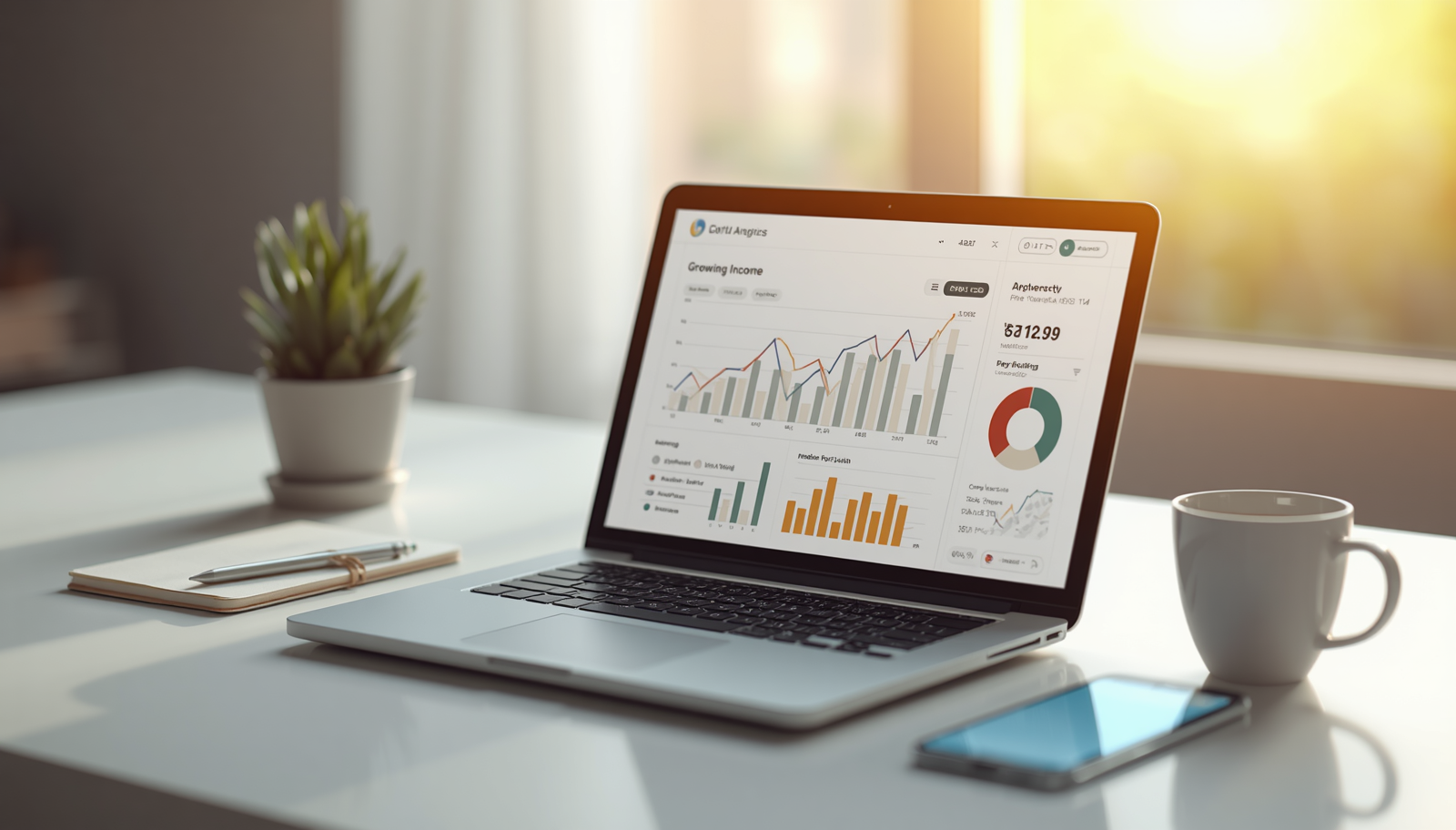
Not too long ago, the path to financial security was straightforward: find a stable job, work hard, save consistently, and slowly build your life step by step. For decades, this “one income, one life” formula was the gold standard. But today, that foundation often feels fragile.
With the rising cost of living, the unpredictability of the job market, and the constant threat of economic shifts, relying on a single paycheck is becoming increasingly risky. Many of us are looking for a way to secure our financial future, not just for today, but for the long haul. This is where the concept of digital income transitions from a “side hustle” trend to a practical, necessary strategy for modern stability.
Building a digital income isn’t about overnight riches—it’s about creating real value, building authentic skills, and diversifying your revenue. If you are ready to take control of your financial destiny, this guide will walk you through the realities, the methods, and the actionable steps to building a sustainable online presence that meets professional standards, including those required by platforms like Google AdSense.
I. What Exactly Is Digital Income?
At its core, digital income is revenue generated through online platforms, remote services, or internet-based assets. Unlike a traditional job that ties you to a physical location or a strict 9-to-5 schedule, digital income leverages the scale of the internet to allow you to earn from anywhere, at any time.
Digital income streams generally fall into two categories:
- Active Income: This is revenue directly tied to your time and effort. Examples include freelance writing, virtual assistance, or graphic design. When you stop working, the income stops, but it is often the fastest way to generate initial cash flow.
- Passive (or Leveraged) Income: This is the “holy grail” for many. You create an asset once—such as an eBook, an online course, or a content-rich blog—and it continues to earn money over time with minimal maintenance.
The most successful digital entrepreneurs often start with active income to build capital and then reinvest their time into creating passive income assets.
II. Why Diversification is Now a Necessity
If you are wondering why you should start this journey now, consider the shift in the global economy:
- Inflationary Pressures: When the cost of groceries, rent, and utilities rises faster than traditional wages, a second income stream isn’t just “extra money”—it is a buffer against a declining quality of life.
- The Fragility of Traditional Employment: We have seen in recent years that company loyalty does not guarantee job security. Automations and corporate downsizing happen quickly. A digital income stream acts as an insurance policy, ensuring you are never starting from zero if your primary employment situation changes.
- Uncapped Earning Potential: In a standard job, your salary is determined by a contract. Online, your income is determined by the value you provide and the scale of the audience you reach. If you solve a problem for 1,000 people instead of one boss, your earning potential changes drastically.
III. The Top 6 Proven Ways to Build Digital Income

Not all online income methods are created equal. To build a sustainable, “AdSense-friendly” business, you should focus on providing genuine value. Here are the most reliable paths:
1. Content Creation (Blogging & Niche Sites)
If you have a passion or expertise, you can turn it into a website. By creating high-quality, helpful articles, you build trust with an audience. Once you have consistent traffic, you can monetize through Google AdSense, affiliate partnerships, or sponsored content.
2. Freelancing
Companies are constantly looking for specialized help without the commitment of hiring full-time staff. Whether it is copywriting, video editing, or social media management, platforms like Upwork and Fiverr allow you to sell your skills directly to businesses.
3. Selling Digital Products
Creating educational materials, templates, or planners is one of the most scalable business models. Since there is no physical inventory, your profit margins are high. Once you create a digital guide that solves a specific problem, you can sell it thousands of times.
4. Affiliate Marketing
You don’t need a product to make money. By recommending tools, software, or physical products that you genuinely use and trust, you can earn a commission on every sale made through your link.
5. Online Courses and Coaching
If you have mastered a skill—be it fitness, coding, or language learning—people will pay for your roadmap to success. Coaching allows for higher price points because you are providing personalized feedback.
6. Remote Professional Roles
Many established companies now hire fully remote employees for roles in customer support, administration, and digital marketing. This provides the safety of a salary with the freedom of location independence.
IV. Step-by-Step: Your Roadmap to Launch
To ensure you don’t get burned out or fall for “get rich quick” traps, follow this structured approach:
Step 1: Identify Your Niche (The “One-Skill” Rule) Do not try to be a video editor, blogger, and affiliate marketer all at once. Pick one path where your interest meets a market need.
Step 2: Master the Fundamentals You don’t need a $2,000 course. Utilize free resources like YouTube, industry blogs, and community forums. Spend time actually learning the craft before you try to sell it.
Step 3: Build Your Portfolio Nobody hires a ghost. Create “proof of work.” Write three sample blog posts, create a mock video, or design a sample template. This proves you can deliver results.
Step 4: Launch Small and Iterate Your first client or your first $5.00 earned online is a massive milestone. Do not aim for six figures on day one; aim for consistency.
Step 5: Scale with Systems Once you have a system that works, use tools to automate. If you are a freelancer, raise your rates. If you are a blogger, invest in SEO to reach a wider audience.
V. Avoiding the “Beginner Trap”
Many people fail, not because the opportunities aren’t there, but because they succumb to common pitfalls:
- The “Easy Money” Fallacy: If someone promises you will be rich by clicking buttons, it is a scam. Sustainable digital income requires the same work ethic as any other career.
- Analysis Paralysis: Spending months “researching” instead of doing. You learn more from one failed attempt than from ten hours of watching tutorial videos.
- Lacking Focus: Trying to launch four different businesses at once is the fastest way to ensure all four fail.
VI. Is It Safe?
The digital world is safe if you maintain a high standard of professional integrity.
- Stick to reputable platforms: Only use well-known freelance sites or ad networks.
- Build your own brand: Do not rely solely on third-party platforms. Start your own website/blog so you own your audience.
- Invest in education, not “shortcuts”: Spend your money on books, tools, and courses that actually teach you a skill.
VII. The Future: Why Start Today?
The digital economy is not going away; it is becoming the backbone of global commerce. Businesses, education, and entertainment are increasingly moving online. By starting today, you are giving yourself the ultimate advantage: time.
The longer you operate in the digital space, the more authority you build, the more your content ranks on search engines, and the more “digital real estate” you own. This is not about being an expert today; it is about being better tomorrow than you were yesterday.
VIII. The 2026 Landscape: Why “Safe” Means “Adaptive”
In 2026, the digital landscape has shifted. AI and automation have made content creation easier, but they have also made human authenticity more valuable than ever.
- The AI Advantage: Do not fear AI; use it. In 2026, those who use AI tools to research, outline, and organize their work are outpacing those who do everything manually. However, ensure your voice, experience, and unique insights remain the core of your content—Google and your audience prioritize content that demonstrates personal expertise.
- Quality over Volume: The internet is flooded with low-effort content. You don’t need to post every day to stay “safe.” Consistent, high-value, deep-dive articles or projects that solve a specific problem will always outperform shallow clickbait.
IX. Your Digital “Starter Kit” (Tools of the Trade)
You don’t need a massive budget to start. In fact, keeping your overhead low is the safest way to build. Here are the essentials for 2026:
| Category | Tool | Why Use It? |
| Organization | Notion | The best free tool to manage your content calendar and project notes. |
| Design | Canva | Allows you to create professional graphics without design skills. |
| Writing | Grammarly | Ensures your professional communication is polished and error-free. |
| Site Management | WordPress | Gives you full ownership of your “digital real estate.” |
| SEO/Research | Google Trends | Helps you see what people are actually searching for right now. |
Take the First Step Today
The internet has removed the walls that once kept us from building our own financial futures. The barrier to entry has never been lower, but the value of action has never been higher.
Are you ready to stop waiting for the “right time” and start building your own security? Pick one skill from the list above. Dedicate just 30 minutes today to researching the basics, and take the first step in creating your own digital asset. Your future self will thank you for the work you do today.
Start now—create your first account, write your first post, or build your first project. The door is open; walk through it.
If you found this guide helpful and want more actionable tips on building your digital footprint and scaling your online income, subscribe to our newsletter for weekly deep dives into sustainable wealth-building strategies.




Leave a Reply