

There’s a woman in every room who commands attention before she says a single word. She’s not wearing the most expensive outfit. She’s not dripping in designer labels. But something about the way she’s put together signals — quietly, powerfully — that she is someone worth listening to. In boardrooms, at investor meetings, on first dates, and at school pick-up, the message lands the same way: this woman has her life together.
That signal? It’s not accidental. It’s built. And like any smart investment, it pays dividends long after the initial effort is made.
Here’s the thing most people get wrong about style: they treat it like a trend to chase rather than an asset to build. The women who always look polished have stopped chasing. Learning how to look polished every day isn’t about chasing trends — it’s about making deliberate, strategic choices — fewer pieces, better quality, smarter combinations — and the result is a wardrobe that works for you, not the other way around.
This guide is your blueprint to do exactly that.
I. Think Like an Investor: Build a Capsule Wardrobe
1. The Capsule Wardrobe as a Portfolio
An investor doesn’t put all their money into speculative, volatile assets. They build a stable portfolio of high-performing fundamentals — reliable, proven, and diversified — then layer in calculated risks for growth. Your wardrobe deserves the same logic.
A capsule wardrobe is your style portfolio. It’s a small, curated collection where every single piece is a strong performer — versatile, timeless, and high in return on wearability. No impulse purchases that get worn once and forgotten. No trend pieces that depreciate in value the moment the season changes. Just solid, well-chosen fundamentals that work harder the more you wear them.
The goal is not to own less. The goal is to own better — so that every item earns its place, and getting dressed in the morning feels like a CEO’s decision: clear, confident, and efficient.
2. The Core Holdings: Non-Negotiable Essentials
Just as any smart portfolio has blue-chip stocks — stable, high-value, proven performers — your wardrobe needs its own equivalents:
- A white button-up shirt — the most versatile piece you will ever own. Tucked, half-tucked, knotted, layered. Day to night. Casual to corporate. ROI: extraordinary.
- Dark wash straight or slim-leg jeans — fitted correctly across the hips and thighs. Not trendy, not dated. Simply right.
- A structured blazer — in camel, black, or cream. This one piece can take you from a creative brief to a client dinner without a single second thought.
- Neutral knit sweaters — oatmeal, soft grey, dusty rose. These are the reliable compounders of your wardrobe — steady, dependable, always delivering.
- A well-cut midi dress or skirt — trainers on the weekend, heels mid-week. One piece, multiple environments.
- Tailored trousers — wide-leg linen or straight-cut cotton. Polished without trying.
- A quality white or black tee — not flimsy. Weighted, structured, lasting. The foundation under everything.
These are your long-term holdings. Once in place, they form a base from which you can take smaller, more experimental risks — a bold print, a trending colour, a statement jacket — without disrupting the stability of the whole.
II. The Highest-Return Decision You’ll Make: Fit Before Fashion
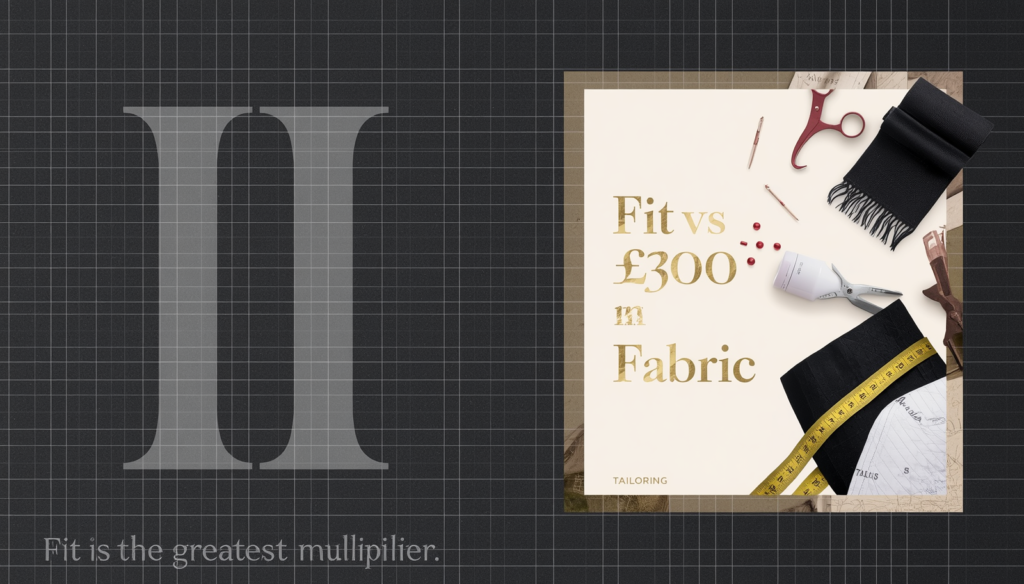
3. Fit Is the Greatest Multiplier
In investing, leverage amplifies returns. In style, fit is your greatest multiplier. A beautifully fitted £30 high-street dress outperforms a poorly fitting £300 designer piece every single time. Without exception.
Clothes that pull, gap, or pool fabric tell the eye something is off — even when the viewer can’t articulate why. Clothes that fit well disappear into the background and let you come forward. That’s the goal. The outfit should frame you, not compete with you.
If you find a piece you love that doesn’t quite fit — don’t abandon it. A skilled tailor is one of the best investments a stylish woman can make. For a fraction of the garment’s price, you can transform something almost-right into something perfect. That’s a return worth calculating.
4. Quality Fabric: The Asset That Appreciates Over Time
Here’s a concept every investor understands: some assets hold their value. Others depreciate the moment you acquire them. Cheap, synthetic fabrics fall into the second category — they pill, fade, lose shape, and look tired before their time.
Natural fibres — cotton, linen, wool, silk, cashmere — are the opposite. They breathe better, drape better, feel better against your skin, and age gracefully. A well-made wool coat bought this year will look just as good in five years. A fast-fashion alternative may not survive the season.
When you’re shopping, treat fabric quality as a key due diligence metric. Feel the weight. Check the content label. Hold it to the light. Quality has a texture you can feel before you even try it on — and when you wear it, that quality translates directly into how polished you look and how confident you feel.
III. Accessories: Maximum Impact, Minimum Capital
5. Small Investments, Disproportionate Returns
The most experienced investors know that it’s not always the largest positions that drive the best returns. Sometimes a small, well-placed bet changes everything. Accessories operate by exactly this principle.
A single, well-chosen accessory can transform the ROI of an entire outfit:
- A delicate gold chain necklace — quiet, timeless, elevates anything it touches
- Classic sunglasses in a frame that suits your face — instant polish, zero effort
- A structured tote or crossbody in a neutral tone — leather or quality faux-leather that holds its shape and signals intention
- A silk scarf — tied in the hair, around a bag handle, or loosely at the neck. One of the most versatile accessories available at any price point
- A clean, simple watch — functional, elegant, and a surprisingly powerful signal of someone who values their time
The key is curation over accumulation. More is not more. A few well-chosen accessories that work together deliver far greater returns than a cluttered jewellery box of random pieces.
6. Build a Cohesive Colour Palette — Think of It as Asset Allocation
The most stylish women aren’t just wearing nice individual pieces — they’ve made strategic decisions about how everything relates to everything else. Their bag doesn’t fight with their shoes. Their jewellery reads as a collection, not a random mix. Their colours tell a unified story.
This is asset allocation applied to style. A smart investor doesn’t scatter money across unrelated, conflicting positions. They build a portfolio with internal logic and coherence. Your accessories should do the same.
Build your palette around:
- Warm neutrals: camel, ivory, oat, sand — safe, high-performing, always in demand
- Earth tones: terracotta, warm brown, rust — grounded, rich, distinctive
- Muted pastels: dusty rose, sage, soft blue — feminine without being loud
- Classic anchors: black, white, navy — the blue-chips of colour. Never wrong.
When your accessories share a colour world, your outfits feel deliberate and sophisticated without any extra effort. That’s compounding at work.
IV. The Details That Signal High Value
7. Your Signature Scent: Brand Identity You Wear
Every great brand has a signature. A scent, a feeling, something you recognise before you even fully process it. Fragrance is your brand identity — the impression you leave in a room after you’ve already left it.
Investors understand the power of brand equity. A strong brand commands a premium, builds loyalty, and creates recall. Your signature scent does the same. Find one or two fragrances that genuinely feel like you — warm and musky, clean and fresh, floral and layered — and wear them consistently. Over time, that scent becomes associated with you specifically. It becomes part of your personal brand.
8. The High-Value Micro-Details
High-performing companies obsess over the details that customers notice subconsciously. They understand that trust is built through consistency and execution, not just the headline product. The same is true of personal style.
The micro-details that signal a high-value, polished person:
- Well-maintained shoes — scuffed heels undo an entire outfit. Polish, repair, replace when necessary.
- Wrinkle-free clothing — ironed or steamed garments signal precision and care
- Clean, trimmed nails — not necessarily painted, but always tended
- Groomed brows — they frame your face and lift your entire appearance
- Consistent skincare — healthy skin is its own kind of confidence and glow
These aren’t vanity metrics. They’re trust signals. They tell the people around you — investors, colleagues, clients, friends — that you pay attention. That you follow through. That the standard you hold for yourself is high.
V. The Long Game: Own Your Personal Style
9. Stop Copying, Start Compounding
Chasing other people’s style is like chasing last year’s hot stock. By the time you’ve acquired it, the return has already been captured by someone else. True wealth — in investing and in style — is built by those who develop their own thesis and stay committed to it.
The most stylish women you admire have done the internal work of understanding what they genuinely love. Not what’s trending. Not what someone else is wearing. What actually feels like them when they look in the mirror.
Here’s a practical audit: pull out the five pieces you reach for most in your wardrobe right now. What do they have in common? Colour, silhouette, fabric, mood? That’s your style thesis. That’s where your next investment should go.
10. Trends Are Speculation — Personal Style Is Infrastructure
Trends are the speculative assets of the fashion world — exciting in the short term, volatile, and rarely worth building a wardrobe around. Some are worth a small position. Most are not.
Personal style is infrastructure. Stable, foundational, built to last. Every time you choose a quality staple over a disposable trend, you’re reinvesting in something with long-term value. And like any compounding asset, personal style gets richer over time — not more expensive, just more refined, more certain, more entirely your own.
11. Consistency Is the Compounding Factor
No great investment strategy works without consistency. Style is no different. Every intentional choice — quality over quantity, fit over fashion, authenticity over trend — compounds. Over months and years, those choices become automatic. Instinctive. Natural.
That’s the moment people start calling your style effortless.
✨ Your Next Move: Start Building Your Style Portfolio Today
Don’t wait for the “perfect” moment to invest in how you show up in the world. Start with a wardrobe audit — what’s performing, what’s dragging returns, what’s missing from your portfolio entirely.
Be ruthless. Keep what fits beautifully, makes you feel genuinely confident, and belongs to the story you’re telling about who you are. Let go of everything else without guilt. Then, with clarity about your gaps, shop with intention — prioritising fit, fabric quality, and versatility above everything else.
Your personal style is one of the highest-return investments you will ever make in yourself. It affects how you’re perceived, how you feel, how you perform, and how others respond to you — every single day.
The best investors don’t wait for the market to be perfect. They start with what they have, make smart choices, and stay consistent.
Save this guide. Share it with a woman in your life who’s ready to stop chasing trends and start building something that lasts. And come back to it every time you need a reminder that the most powerful version of you is already in your wardrobe — she just needs a smarter strategy.