
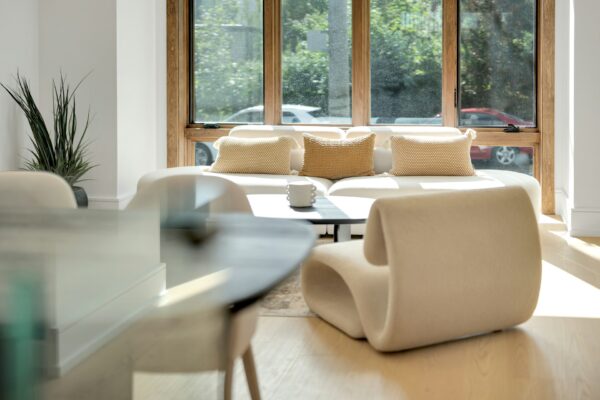
There’s a quiet kind of magic that happens when you walk into a room that has just enough — not too much, not too little. Everything feels intentional. The air feels lighter. You exhale without knowing why. That’s the power of minimalist home styling done right.
But here’s what most people get wrong: they think minimalism is about cold white walls and empty rooms that feel like a dentist’s waiting area. It’s not. Real minimalism is warm, welcoming, and — when approached with the right mindset — surprisingly affordable. In fact, some of the biggest wins in minimalist design come directly from spending less, not more.
Whether you’re redesigning your entire home or just trying to make your living room feel less chaotic, these little-known rules will help you create a space that looks expensive, feels peaceful, and actually saves you money in the process.
I. Start With Decluttering — And Watch Your Budget Thank You
The very first step in any minimalist transformation costs absolutely nothing. It’s decluttering — and it’s more powerful than most people give it credit for.
Here’s the real secret: most of us are living surrounded by things we don’t need, don’t love, and honestly forgot we even owned. Clothes with the tags still on. Kitchen gadgets used once. Décor bought on impulse. All of it is quietly costing you — in space, in mental energy, and often in storage costs too.
How to declutter without overwhelm:
- Start small. Don’t try to tackle the whole house on a Saturday morning. Pick one drawer, one shelf, or one countertop. Finish it. Celebrate it. Move on.
- Ask the right question. Don’t ask “should I keep this?” Ask “does this genuinely add value or joy to my life right now?” If you hesitate, that’s usually your answer.
- Sell what you can. Apps like Facebook Marketplace, Depop, and eBay make it surprisingly easy to turn your clutter into cash. A declutter weekend can realistically earn you $100–$500+ depending on what you’re letting go of.
- Donate the rest. What doesn’t sell, give away. It feels good, it helps others, and it gets the stuff out of your space.
The ripple effect of decluttering goes beyond aesthetics. When your home is simplified, you stop buying duplicates of things you already own. You stop replacing things you can’t find. Your grocery bill gets more intentional. Your shopping habits shift. Decluttering, in the most practical sense, is a savings strategy wearing a design hat.
II. Master the Minimalist Color Palette Without Spending a Fortune
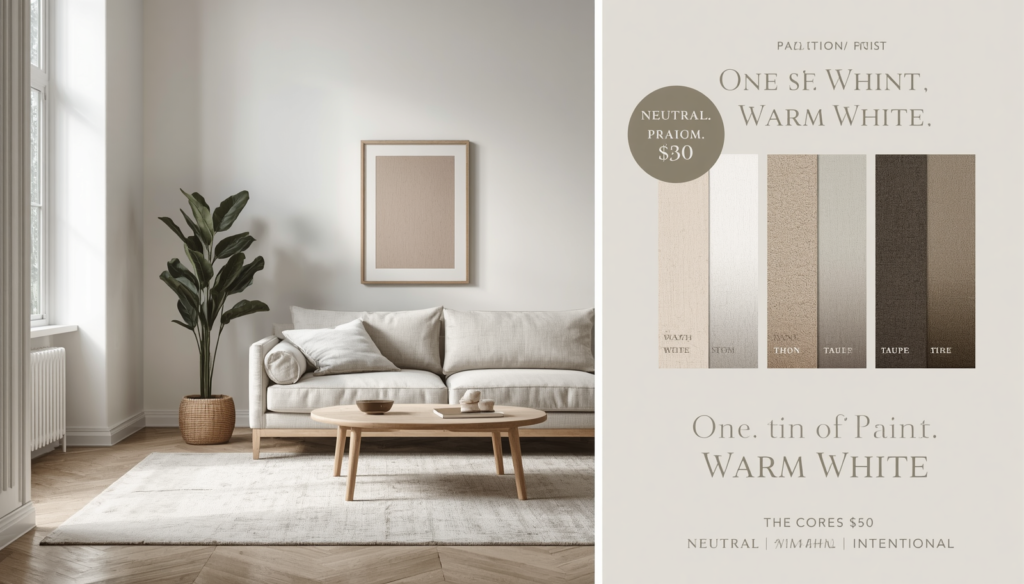
Once the clutter is cleared, the next thing that transforms a space is color — and minimalism has a beautiful relationship with restraint here.
Neutral tones are the backbone of the minimalist palette: soft whites, warm beiges, muted grays, and the natural warmth of wood. These shades don’t compete with each other. They breathe together, creating a visual calm that makes rooms feel bigger, lighter, and more cohesive.
The budget-smart approach to color:
- Paint is the most cost-effective renovation you can do. A single can of paint ($30–$50) can completely transform a room. Choose a warm white or a soft greige (gray-beige) and watch your space open up.
- You don’t have to repaint everything at once. Start with one accent wall or one room. A consistent neutral palette means everything will coordinate anyway, so you can add to it gradually.
- Avoid trendy colors that date quickly. Minimalist neutrals are timeless — which means you won’t feel the urge to redecorate every two years. That’s real savings in disguise.
Now, a word about warmth — because minimalism gets a bad reputation for feeling cold, and that’s usually because people skip this step. Texture is what brings a neutral palette to life. A cream linen cushion. A chunky knit throw. A woven jute rug. These tactile elements add depth and coziness without adding visual noise. And the best part? You can source these beautifully and affordably from places like IKEA, H&M Home, or even thrift stores.
Minimalist doesn’t mean stark. It means curated. There’s a difference.
III. The Furniture Rules That Save You Thousands Long-Term
This is where minimalism really starts to pay off financially — but it requires a mindset shift that doesn’t come naturally to everyone at first.
The rule is this: buy fewer, better things.
We live in a culture of cheap, fast furniture. It’s tempting to fill a room quickly and affordably. But inexpensive furniture that falls apart in two years ends up costing more than a quality piece bought once. Beyond the money, cheap furniture also tends to look cheap — and in a minimalist home where every piece is visible and intentional, that matters.
The minimalist furniture approach:
- Identify the three or four pieces each room actually needs. In a living room, that’s usually a sofa, a coffee table, and a side table or shelving unit. That’s it. You don’t need a room full of furniture to have a beautiful room.
- Invest incrementally. You don’t have to buy everything at once. Live with less for a while. See what you genuinely miss. Then invest in that piece specifically. This slow approach saves money and leads to better decisions.
- Choose clean lines and functional design. Minimalist furniture is timeless by nature — simple silhouettes in wood, linen, or leather don’t go out of style. You buy it once, and it works for a decade.
- Shop secondhand first. Vintage and pre-loved furniture is often higher quality than new budget pieces, and it’s significantly cheaper. Facebook Marketplace, Craigslist, thrift stores, and vintage shops are goldmines for well-made, character-rich furniture at a fraction of retail.
- Prioritize natural materials. Wood, stone, linen, and leather age beautifully. They look more expensive as they wear in, rather than looking worn out.
The math here is simple: three quality pieces that last ten years will almost always cost less than replacing three cheap pieces every two to three years. Minimalist design and smart spending are natural allies.
IV. Décor That Earns Its Place — And Doesn’t Break the Bank
One of the biggest myths about luxurious interiors is that they require expensive décor. They don’t. They require intentional décor — which is a completely different thing.
In a minimalist home, every object you display is a choice. A single beautiful vase. One meaningful piece of art. A stack of books on a coffee table. A plant that adds life to a corner. These things don’t need to be expensive. They need to feel deliberate.
Practical rules for minimalist décor on a budget:
- The “one in, one out” rule. Before anything new enters your space, something old leaves. This keeps clutter from creeping back in and forces you to be selective about what you truly want to live with.
- Nature is free décor. Fresh branches from the garden. A bowl of lemons. A simple vase of wildflowers. Natural elements bring warmth and life into a minimalist home without costing anything.
- Rotate, don’t accumulate. Instead of buying new décor seasonally, rotate a small collection of items you already own. Changing what’s displayed gives your home a refreshed feel without spending a cent.
- Art doesn’t have to be expensive. Print a black-and-white photo you love. Frame a piece of fabric. Hang a single large canvas print — these can be found for under $30 online and create a significant visual impact.
- Less means each piece matters more. When you have ten things on a shelf, nothing stands out. When you have two, each one becomes something worth noticing.
This is the core beauty of minimalism: by removing the excess, you actually give more meaning to everything that remains.
V. Embrace Empty Space — The Most Underrated Design Tool
Here’s the rule that most people struggle with most: empty space is not wasted space.
In Western culture, we’re conditioned to fill things. Empty walls feel unfinished. Open shelves feel forgotten. A bare corner feels like something’s missing. But in minimalist design, that emptiness is the point. It’s what gives your eye room to rest. It’s what lets the things you do have actually breathe and be seen.
Negative space — the gaps between furniture, the blank wall beside a piece of art, the open stretch of countertop — is what makes a room feel luxurious. Expensive hotels and high-end showrooms understand this instinctively. Space itself is the luxury.
How to make peace with empty space:
- Don’t rush to fill every corner. Give a room time. Live in it. Notice what you genuinely need versus what you’re adding out of habit or discomfort.
- Resist the wall gallery impulse. One large piece of art on a wall will almost always look more intentional and elevated than a gallery of twelve smaller ones.
- Keep surfaces clear by default. Countertops, coffee tables, and shelves should be mostly empty. The few things you do place there become focal points rather than background noise.
When your home has breathing room, it stops feeling like something to manage and starts feeling like somewhere to actually rest. And that sense of peace? That’s worth more than any throw pillow or decorative tray.
The Bottom Line: Minimalism Is Both a Lifestyle and a Financial Win
Here’s what nobody tells you about minimalist home styling: when you do it thoughtfully, you genuinely spend less money. You stop impulse buying. You stop replacing things that broke. You stop paying for storage you don’t need. You start making intentional purchases that last.
You also reclaim something that money can’t buy: mental clarity. A simplified home is a simplified mind. Less visual noise means less mental noise. And in a world that constantly pulls at our attention, that quietness is genuinely rare and precious.
Minimalism isn’t about having less for the sake of having less. It’s about making room — room for the things that matter, room for the people you love, and room for the life you actually want to be living.
Ready to Start Your Minimalist Home Journey?
You don’t have to overhaul everything at once. Start with one drawer today. Clear one surface. Donate one bag of things you don’t need.
Then notice how it feels.
That feeling — lighter, calmer, more in control — is what keeps you going. And before long, you’ll find that your home has become exactly what you wanted it to be: a place that looks beautiful, costs less to maintain, and actually feels like somewhere you want to be.
Drop a comment below and share: what’s the first space in your home you’re going to simplify? We’d love to hear where you’re starting — and how it goes.
Enjoyed this article? Share it with a friend who could use a little more calm and a little less clutter in their life.